

From osprey to dolphin, the wild side of Virginia’s River Realm is always on display. Where the Wild Things Are is a growing wildlife-spotting library designed to help you discover theflora and fauna that call this region home. Browse by season, learn what to look for, and find public places where these species are commonly seen, whether by boat, by paddle, or on foot.
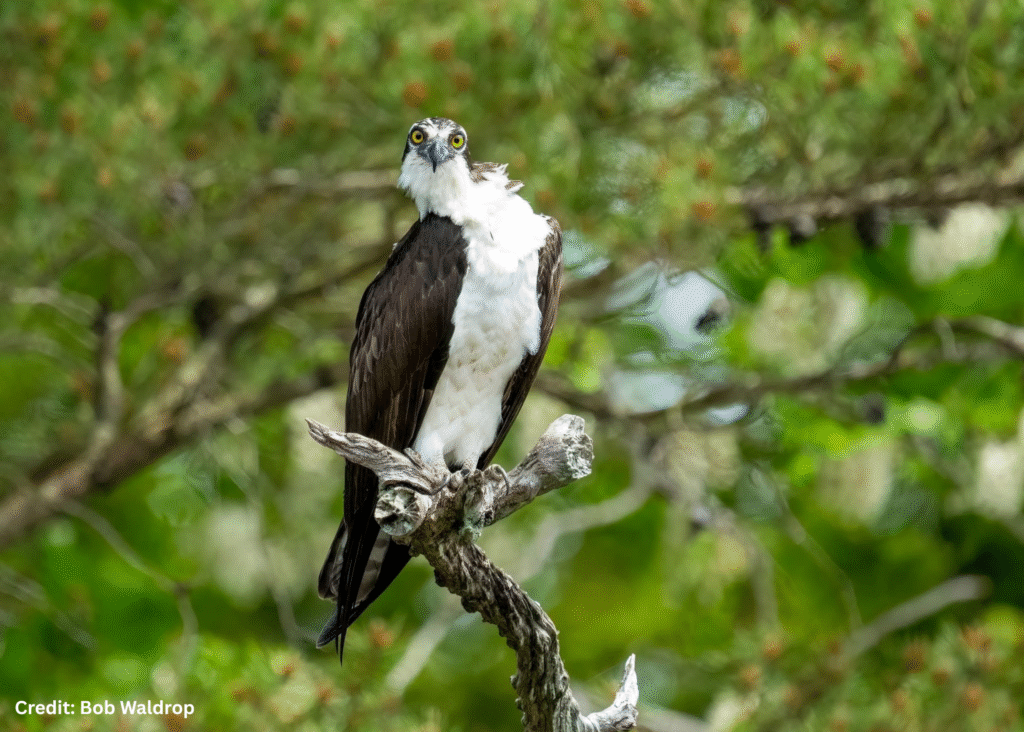
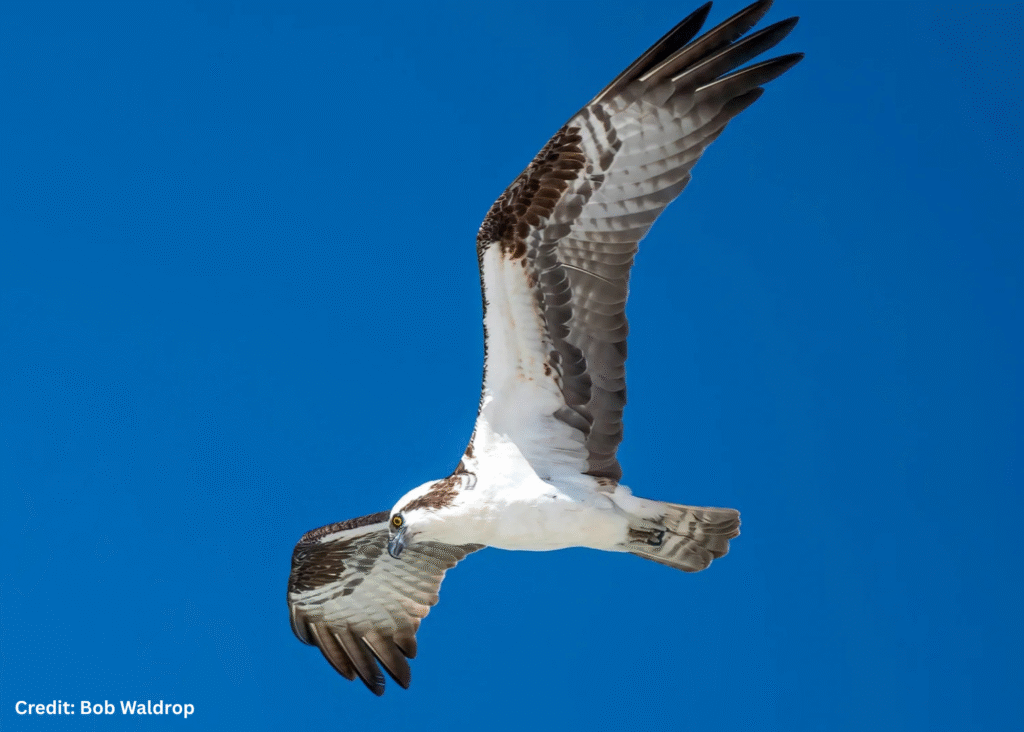
A true sign of spring in Virginia’s River Realm, Ospreys return each year to nest, fish, and raise their young along our rivers, creeks, and shorelines. Often called “Fish Hawks,” these striking raptors are known for their dramatic dives and are one of the most exciting birds to spot in Middlesex County and the surrounding River Realm as the warmer season begins.
Ospreys are large brown-and-white raptors with long, narrow wings, a white underside, and a bold dark stripe running through the eye; in flight, their wings appear slightly bent or “crooked” as they glide over the water.
Late March through early fall, with peak activity in spring and summer as Ospreys return to nesting sites and are frequently seen hunting over open water.
Osprey prefer open water with abundant fish and tall nesting structures nearby. Look for nests on dead trees along river shorelines and creek mouths, as well as on pilings and channel markers. For the best chance of spotting one, scan the water from a boat or visit one of our public waterfront access points for a good view from land.
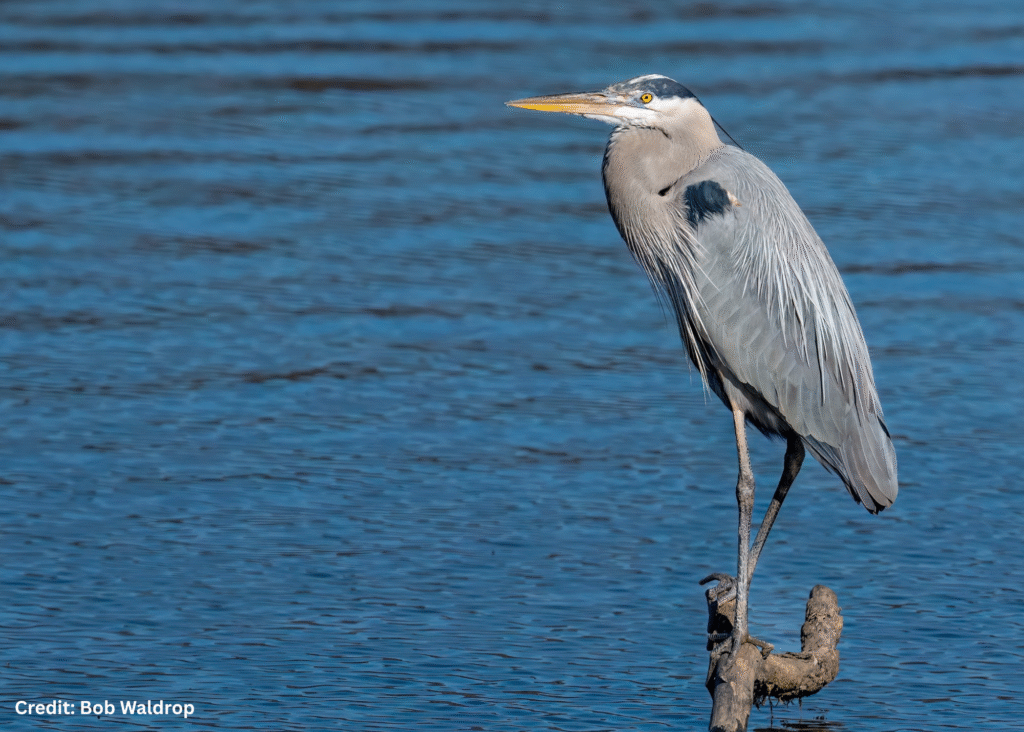
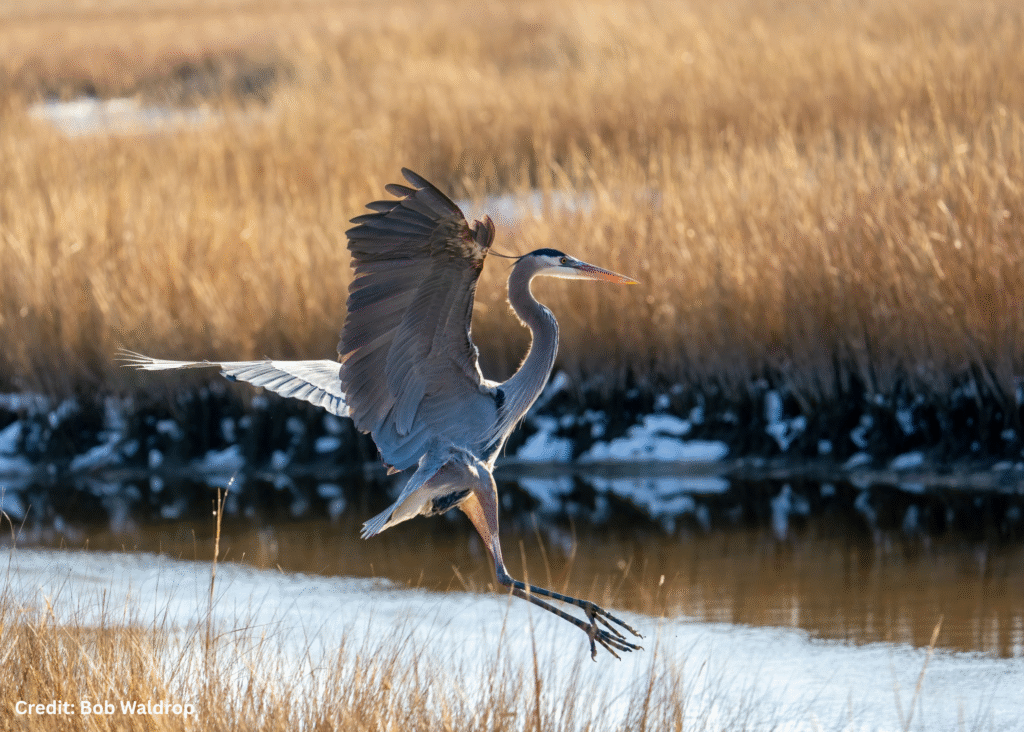
A year-round resident of Virginia’s River Realm, the Great Blue Heron becomes especially active and visible in spring as shallow waters warm and feeding opportunities increase. With its towering height and slow, deliberate movements along shorelines and wetlands, this iconic wading bird is one of the most reliable wildlife sightings for visitors exploring the region in early spring.
Great Blue Herons are tall, slate-blue wading birds with long legs, a long neck often held in an “S” shape, and a dagger-like bill; in flight, they appear large and slow-winged, with the neck tucked back.
Year-round, with peak visibility in spring when herons are actively feeding in shallow creeks, wetlands, and shoreline areas.
Great Blue Herons hunt in shallow water. Look for them standing along marsh edges, mudflats, and quiet creek banks where they wait to spear fish, crabs, and frogs. Scan the shoreline while boating or paddling, or visit a public waterfront access point for a good view from land.
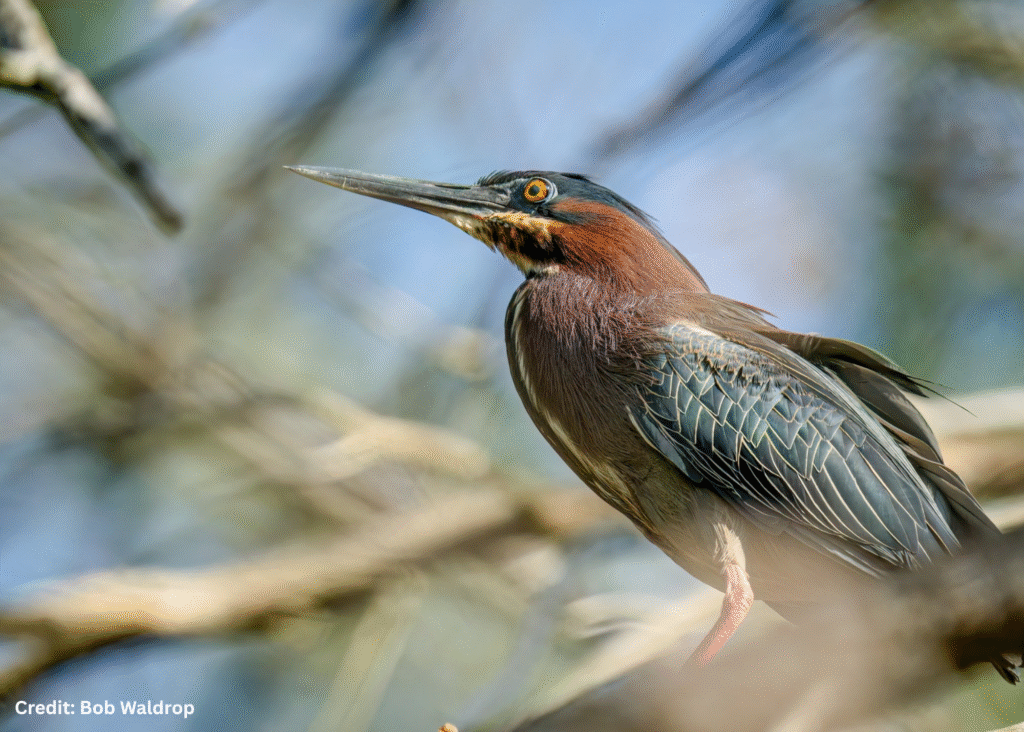
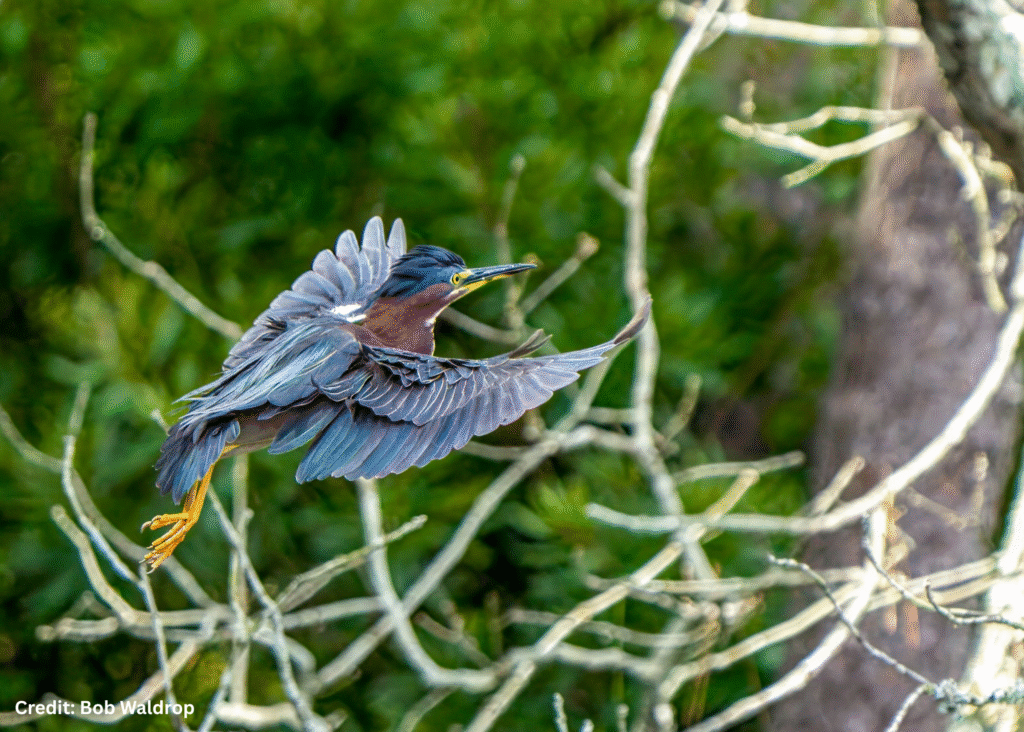
A quiet, watchful presence of spring and summer in Virginia’s River Realm, the Green Heron returns to local creeks and wetlands as the season warms. Smaller and more secretive than its larger heron cousins, this chestnut-necked wader is often spotted standing still along shaded shorelines before striking quickly at passing prey.
Green Herons are compact, crow-sized wading birds with a chestnut neck, grayish-green back, and dark cap, often seen hunched along the water’s edge or slipping into the trees along wooded creeks.
April through early fall, with the first arrivals typically appearing in early spring and activity peaking through late spring and summer.
Green Herons prefer quiet, sheltered water with thick shoreline vegetation. Look for them along wooded creek banks, marsh edges, and overhanging branches where they hunt fish, insects, and small frogs in shallow water. Scan shaded creek edges while paddling or boating, or watch the shoreline from a public waterfront access point.
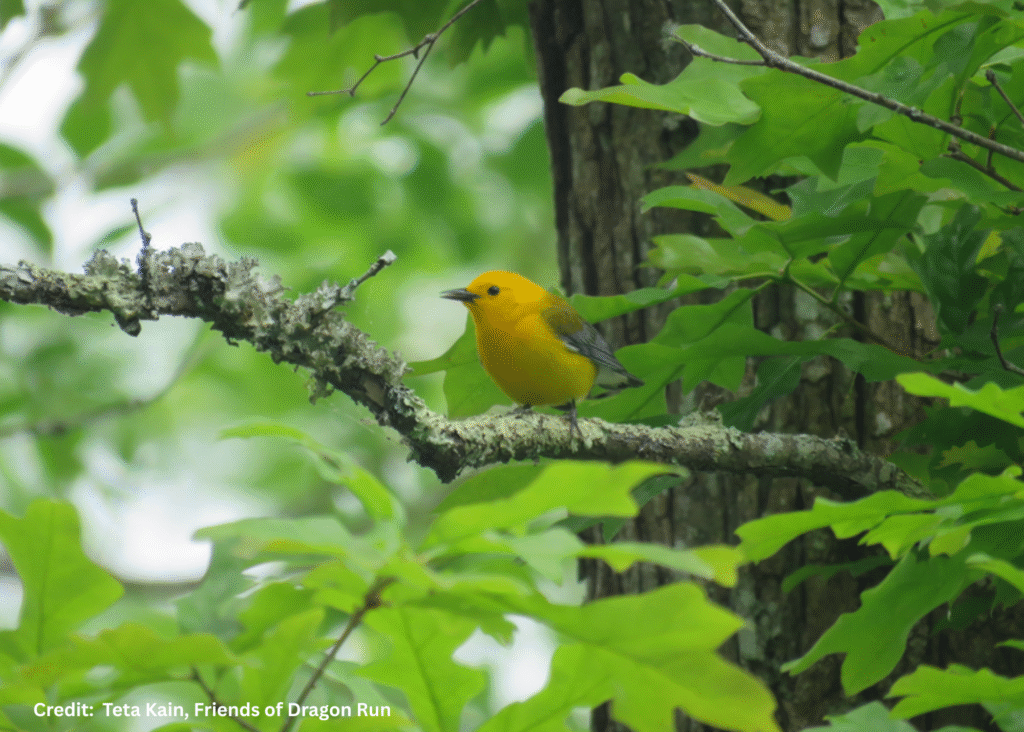
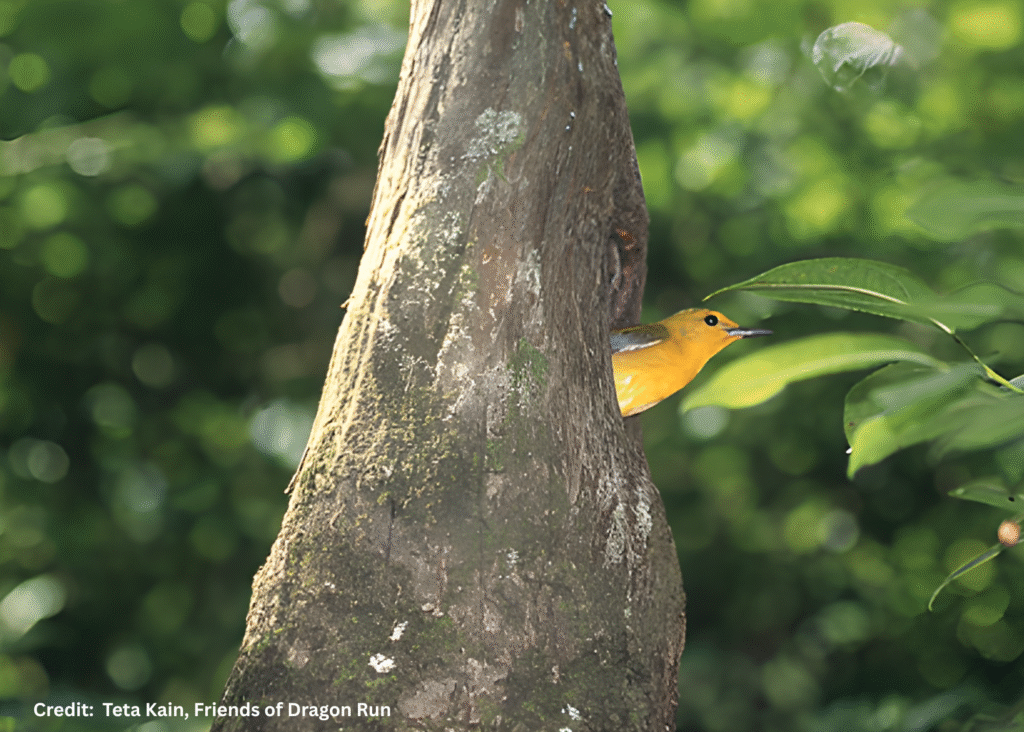
The Prothonotary Warbler returns each April to nest in swamp forests and flooded bottomlands along quiet creeks. Often called the “swamp canary,” this striking yellow songbird is a favorite sight for paddlers as it flits low over the water or perches along bald cypress knees.
Prothonotary Warblers are vivid golden-yellow birds with olive backs and bluish-gray wings, standing out brightly against the dark greens and browns of swamp forests.
April through summer, with peak visibility in spring as birds return to breed and establish nesting territories.
Prothonotary Warblers favor flooded forests, swamp edges, and slow-moving waterways with standing dead trees where they nest in natural cavities. Look for them moving through low branches above the water as they search for insects and other small prey. Quiet paddles through swampy creeks or visits to wooded wetlands offer the best chance to spot one.
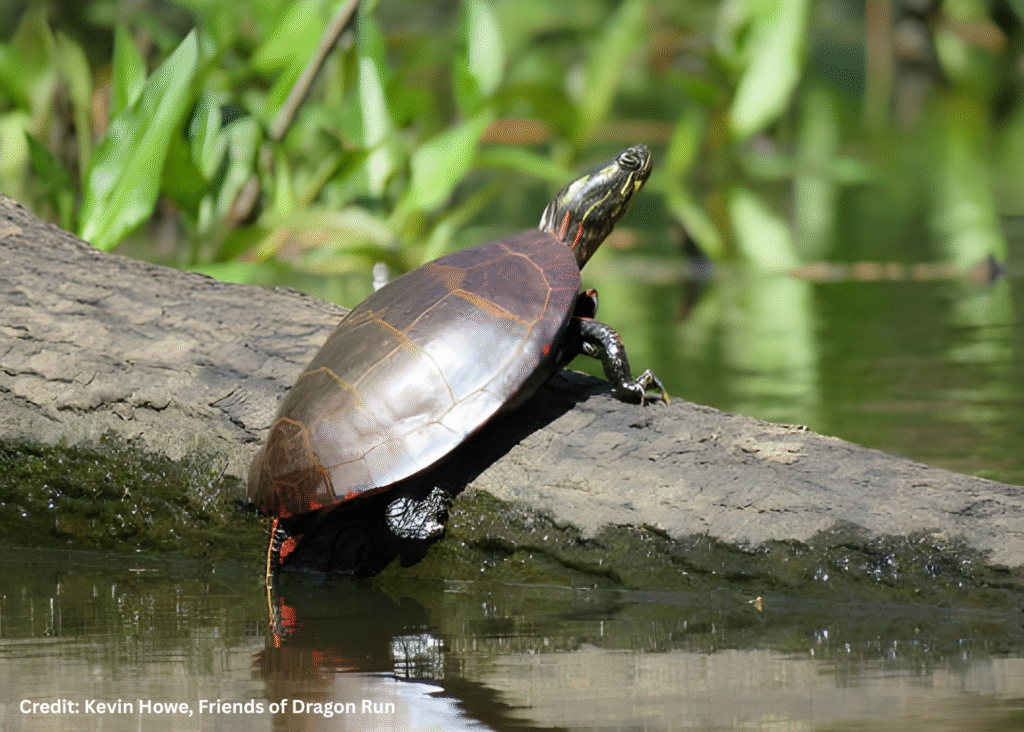
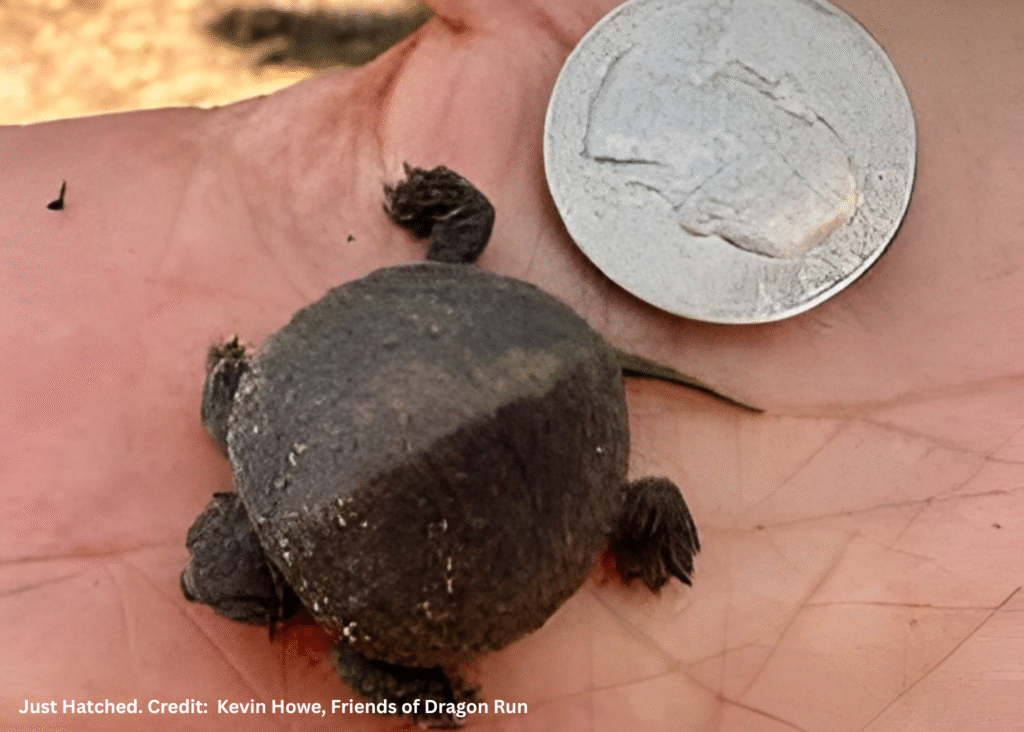
Eastern painted turtles emerge as sunny days return, basking on logs and banks along slow-moving creeks, ponds, and wetlands. These colorful native turtles are among the first reptiles visitors are likely to spot as winter fades, making them a favorite find for paddlers, boaters, and trail walkers alike.
Eastern painted turtles are small to medium-sized turtles with dark olive-to-black shells edged in red markings, a bright yellow underside, and thin yellow stripes along the head and neck—often seen sunning themselves in small groups.
Early spring through fall, with peak visibility on warm, sunny days when turtles climb out of the water to bask.
Eastern Painted Turtles prefer calm freshwater habitats such as ponds, wetlands, and slow backwaters with plenty of logs and rocks for basking. Look for them sunning themselves on exposed logs or along muddy banks on warm spring days. Freshwater swamps and low-salinity tidal creeks—like those found along the Dragon Run—offer some of the best opportunities to spot them.
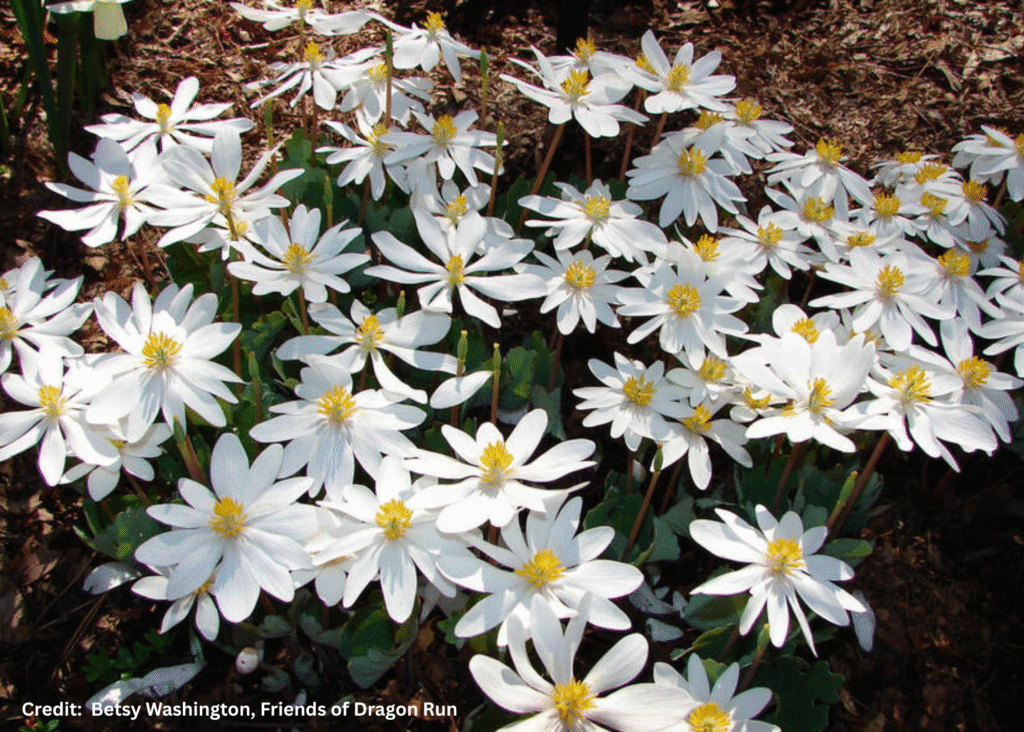
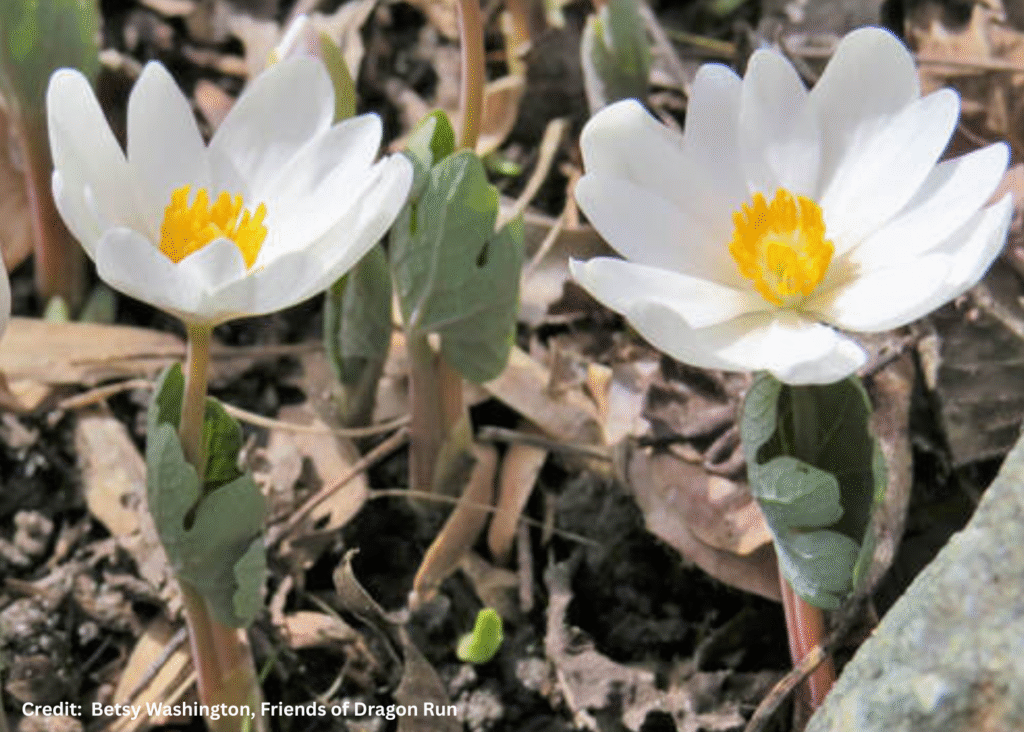
One of the earliest and most fleeting signs of spring in Virginia’s River Realm, bloodroot is a cherished wildflower that briefly lights up forest floors before tree canopies fully leaf out. Its snow-white blooms appear for only a short window in early spring, making each sighting feel like a small seasonal reward for those exploring shaded trails and woodland edges.
Bloodroot is a low-growing woodland wildflower with bright white, daisy-like blooms and a single curled leaf that often wraps protectively around the flower bud; its blossoms open wide on warm, sunny days and close again at night or during cold, rainy weather.
Early to mid-spring (often March), with blooms lasting only a few days depending on weather conditions.
Bloodroot grows in rich, shaded woodland soils. Woodland trails and moist forest floors offer the best chance to spot this short-lived spring ephemeral.
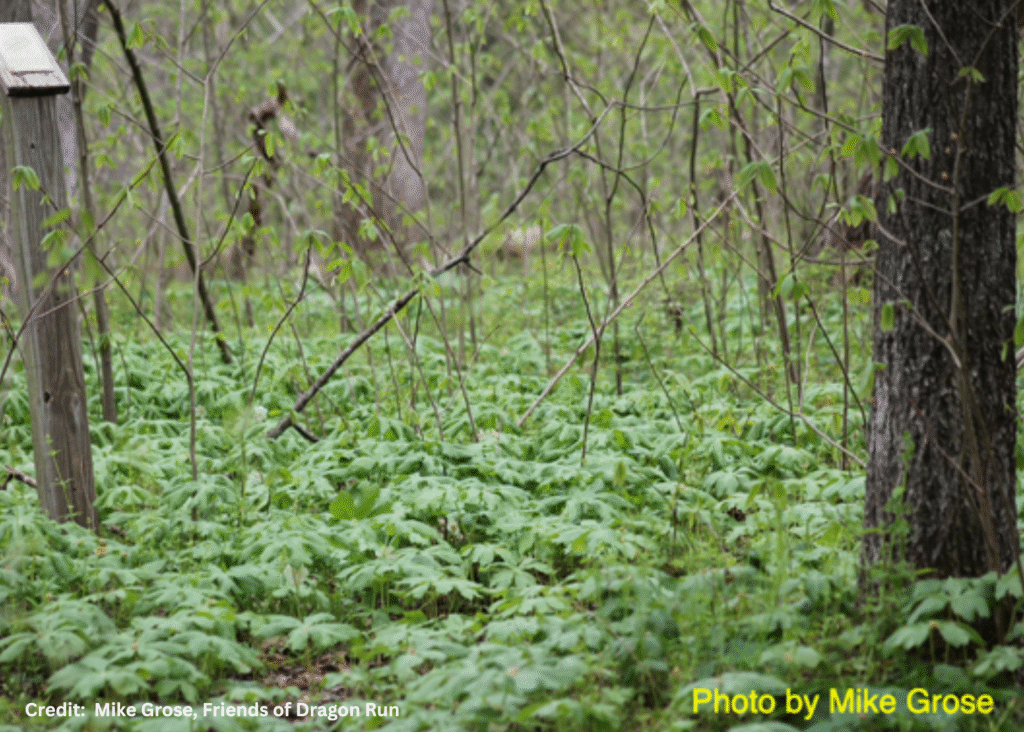
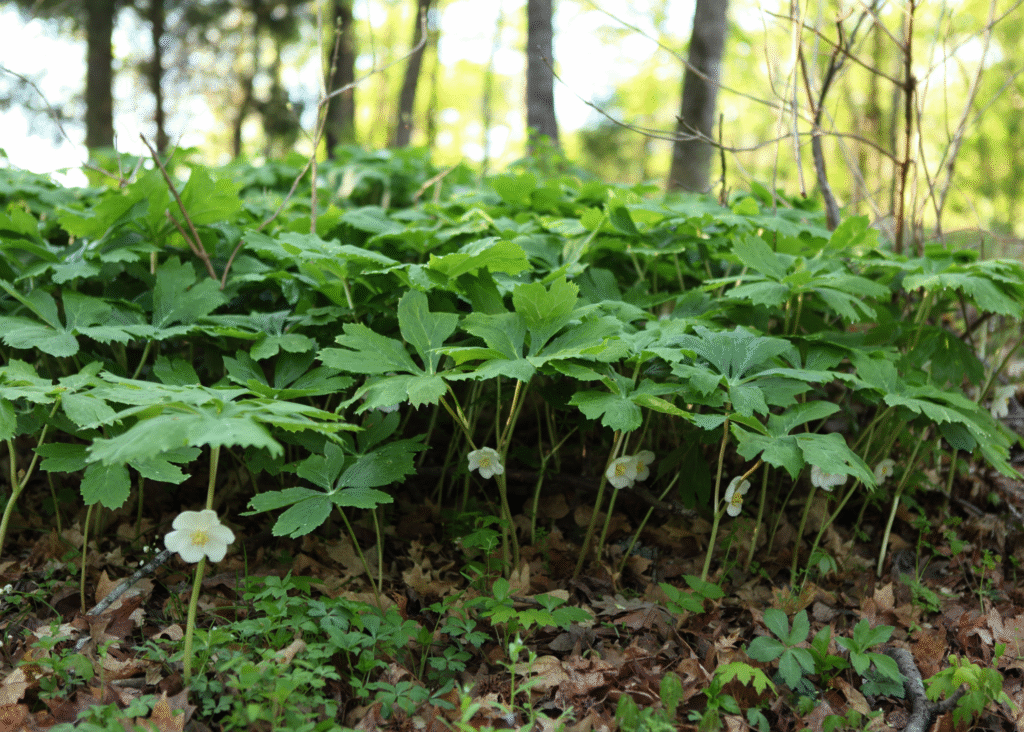
Mayapple emerges in colonies that create a sea of umbrella-like leaves across shaded woodlands in Virginia’s River Realm. These spring ephemerals bloom and leaf out briefly before fading back by early summer, making them a special find for those exploring forest trails during the heart of spring.
Mayapples have large, deeply lobed leaves that resemble little umbrellas on single stems; their small white flowers and developing fruit hang beneath the leaves, often hidden from view.
Early to mid-spring (typically March through May), with leaves and blooms appearing before the forest canopy fully fills in.
Mayapple grows in moist, rich woodland soils and is commonly found in shaded deciduous forests. It often forms large colonies across the forest floor, especially in areas with deep leaf litter and filtered spring sunlight before the canopy fully leafs out.
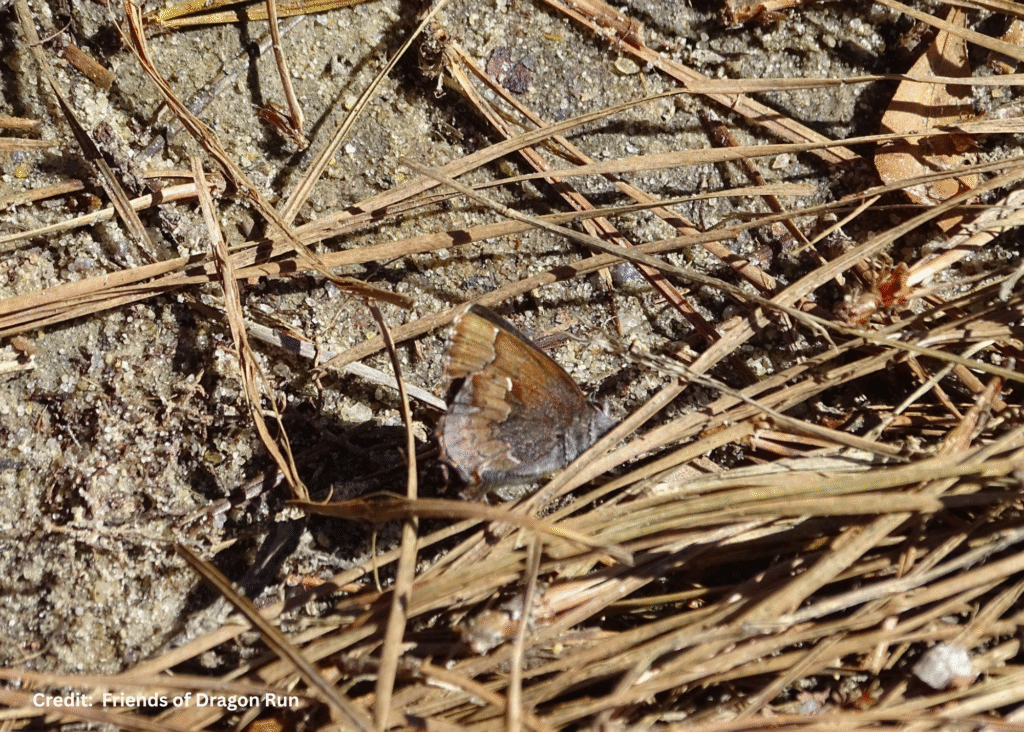
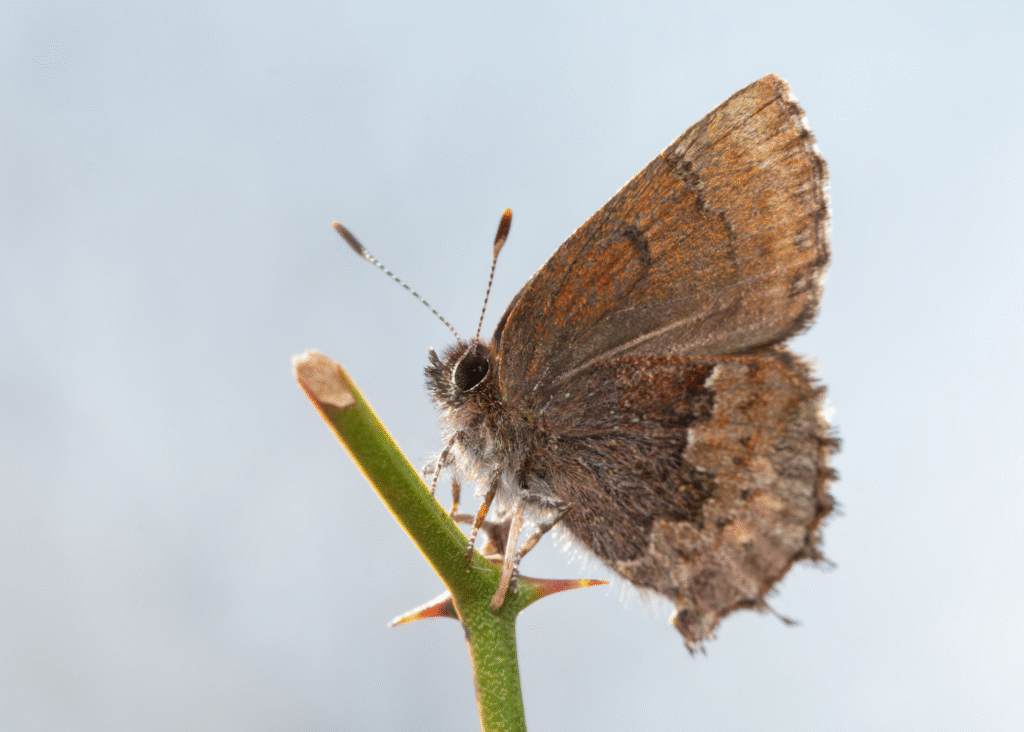
One of the earliest butterflies in Virginia’s River Realm, Henry’s elfin appears just as forests begin to wake up, fluttering through woodland edges and along shaded trails. Small and easily overlooked, this subtle butterfly is a fleeting reward for those exploring the woods in early spring, often seen darting low among budding shrubs and early blooms.
Henry’s elfin is a small brown butterfly with delicate white markings on the underside of its wings; it tends to perch low in vegetation or flit quickly through forest edges, blending easily into the leaf litter and branches.
Early spring, typically March through April, with activity peaking on warm, sunny days.
Henry’s Elfin is most often found in deciduous woodlands and forest edges, especially where its host plants such as redbud and holly grow. It favors sunny clearings, woodland trails, and shrubby understories where early spring nectar sources are available.
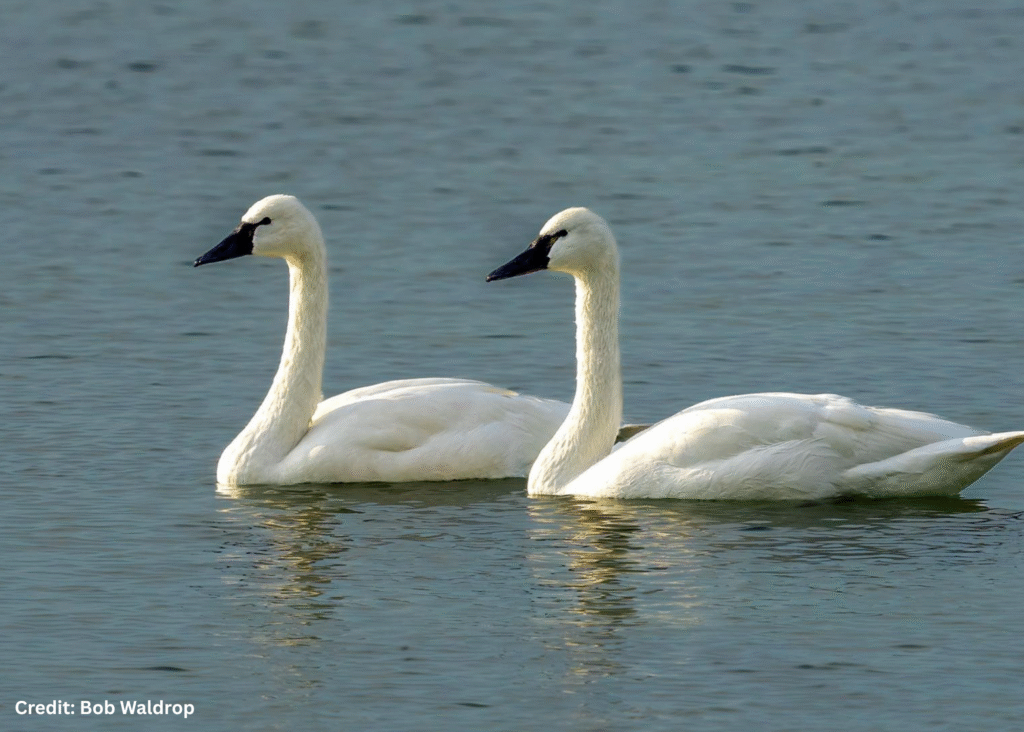
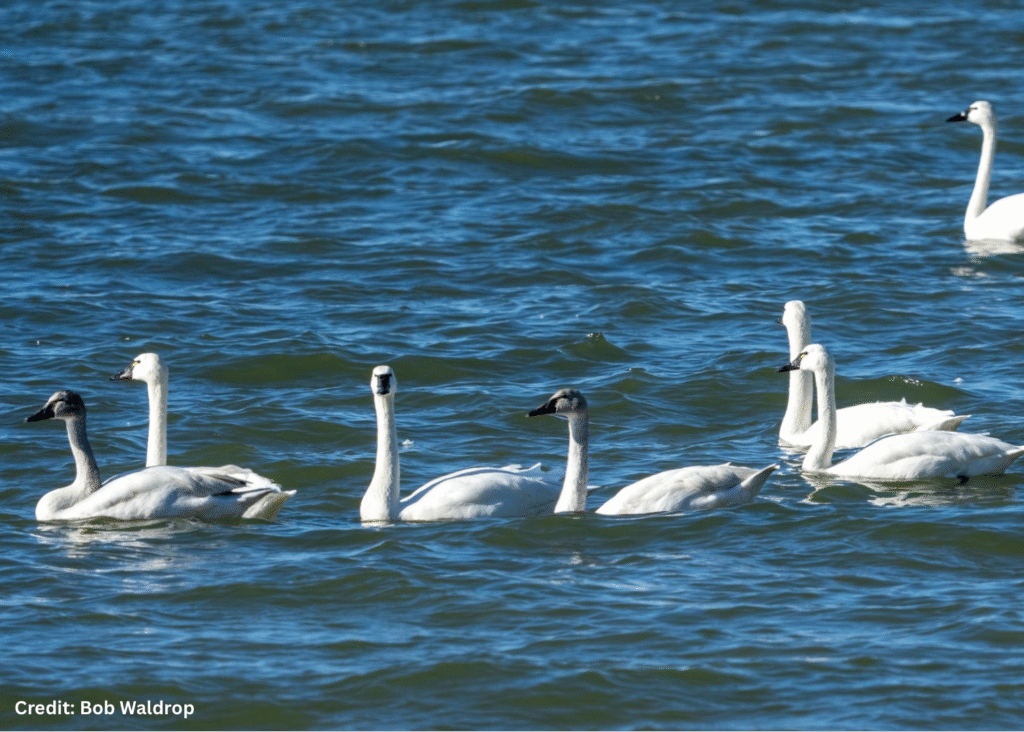
A highlight of winter in Virginia’s River Realm, Tundra Swans return each year from the Arctic tundra to feed, rest, and court along our creeks, rivers, and bays. These elegant birds mate for life, and their seasonal presence—often seen swooning, swanning, and strengthening pair bonds—has become a cherished winter tradition for locals and visitors alike.
Large and bright white with long necks and a black bill marked by a small yellow spot, Tundra Swans are often seen resting on open water or flying in flocks. They frequent shallow creeks, bays, wetlands, and nearby fields, feeding on aquatic plants, clams, and grains.
Late fall through early spring, with peak visibility in mid-winter (January–February) before they begin migrating back north to breed in the Arctic tundra.
Tundra Swans gather in shallow tidal waters where they can reach the bottom to feed on submerged plants and shellfish. Look for them resting or feeding in protected bays, river shallows, and the mouths of creeks during the winter months. Large flocks are often easiest to see from open shorelines or quiet waterways where the water remains shallow.
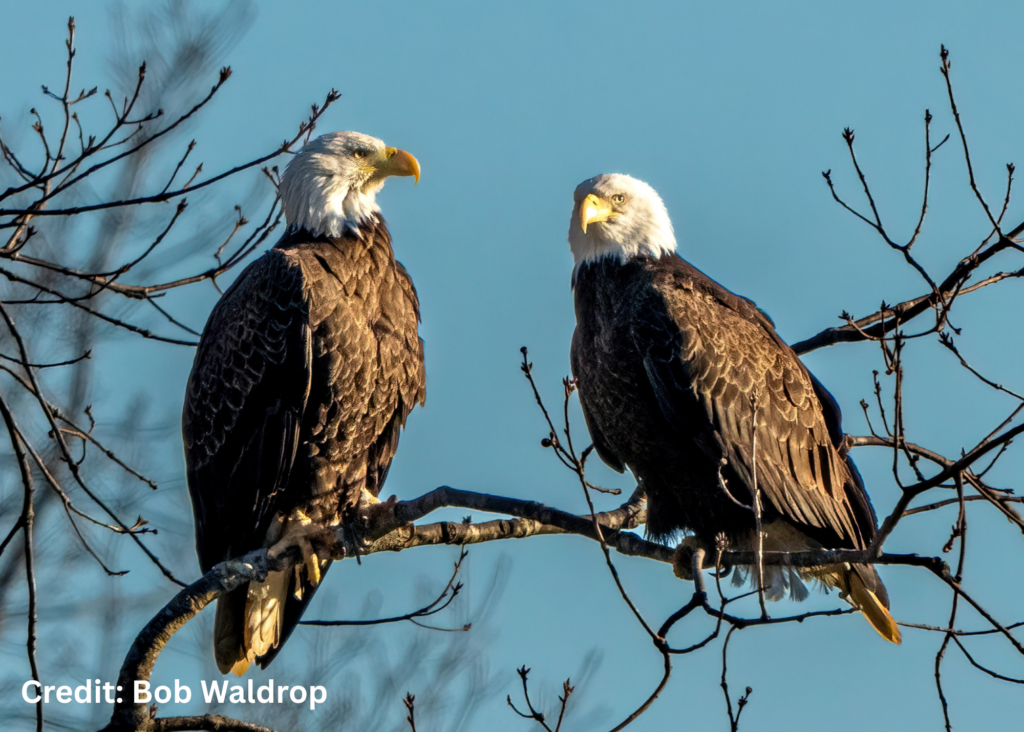
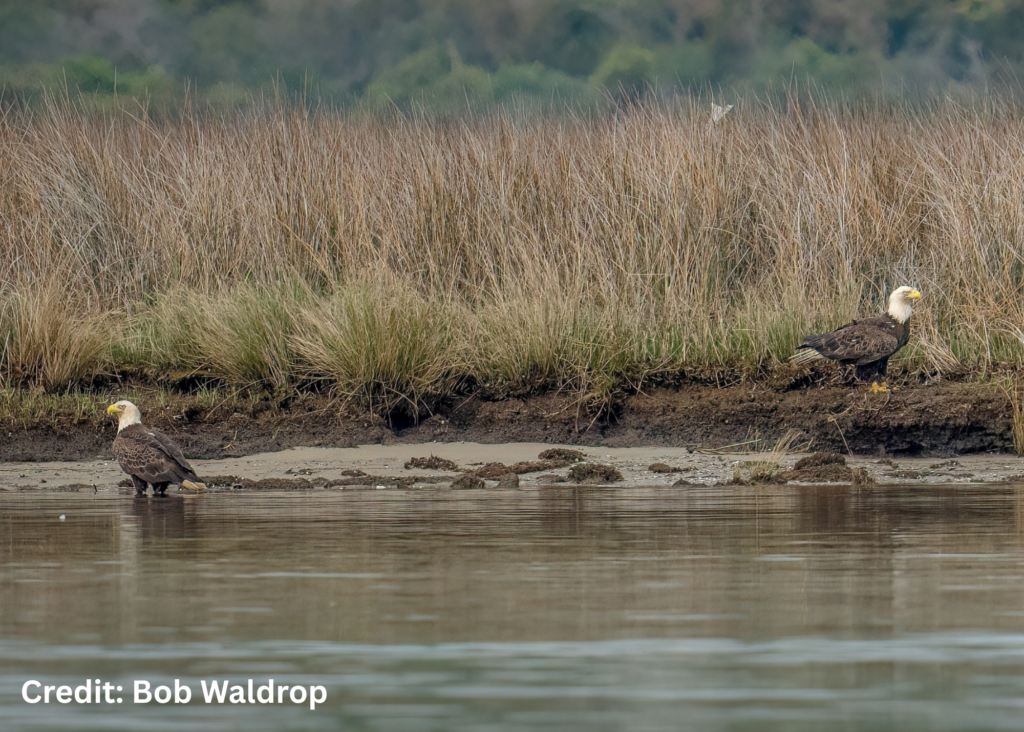
The Bald Eagle, America’s national bird, is one of the most iconic wildlife species found throughout Virginia’s River Realm. With its striking white head and tail contrasting against a dark brown body, the Bald Eagle is unmistakable as it soars high above creeks, rivers, and open water searching for fish. Once endangered due to habitat loss and pesticide use, Bald Eagle populations have made a remarkable recovery and are now commonly seen along the Chesapeake Bay and its tributaries. Their large stick nests—often reused and expanded year after year—can reach impressive sizes high in tall trees near the water.
Bald Eagles can be seen year-round in the region, but late winter through early spring (January–March) is an especially active time. During this period, many pairs are nesting, incubating eggs, or caring for young, making them easier to observe as they frequently travel between nest sites and nearby waters to hunt.
Bald Eagles favor large waterways, tidal rivers, creeks, and bays where tall shoreline trees provide nesting and perching sites near good fishing grounds. Look for them soaring above open water, perched high in pines or hardwoods along the shoreline, or gliding along marsh edges and riverbanks.
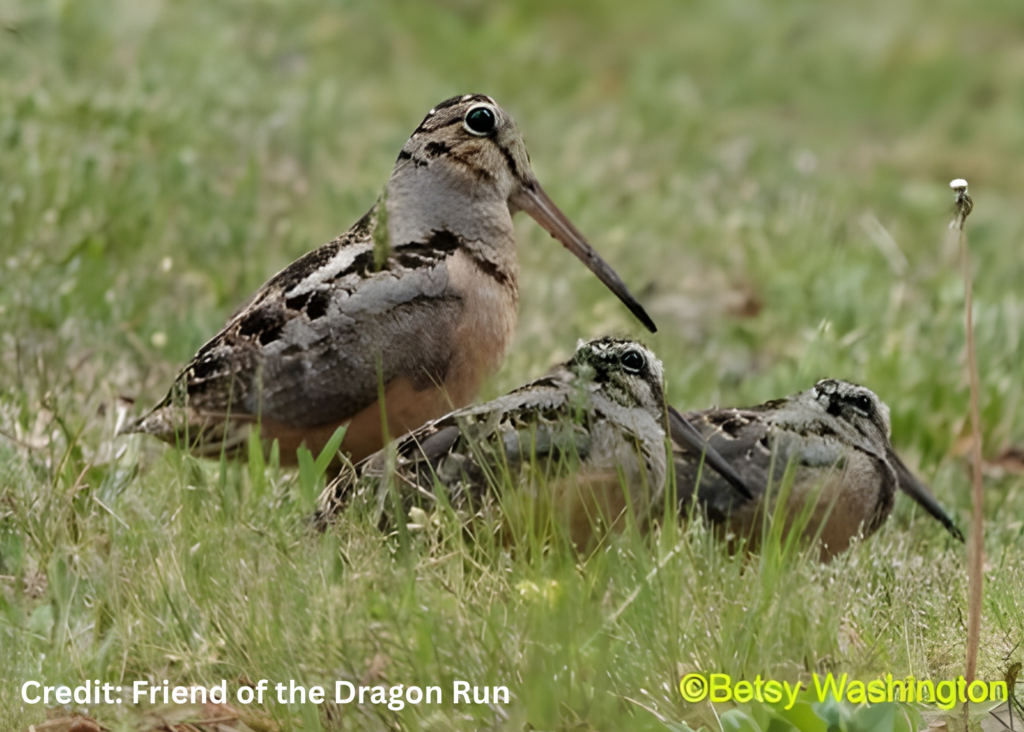
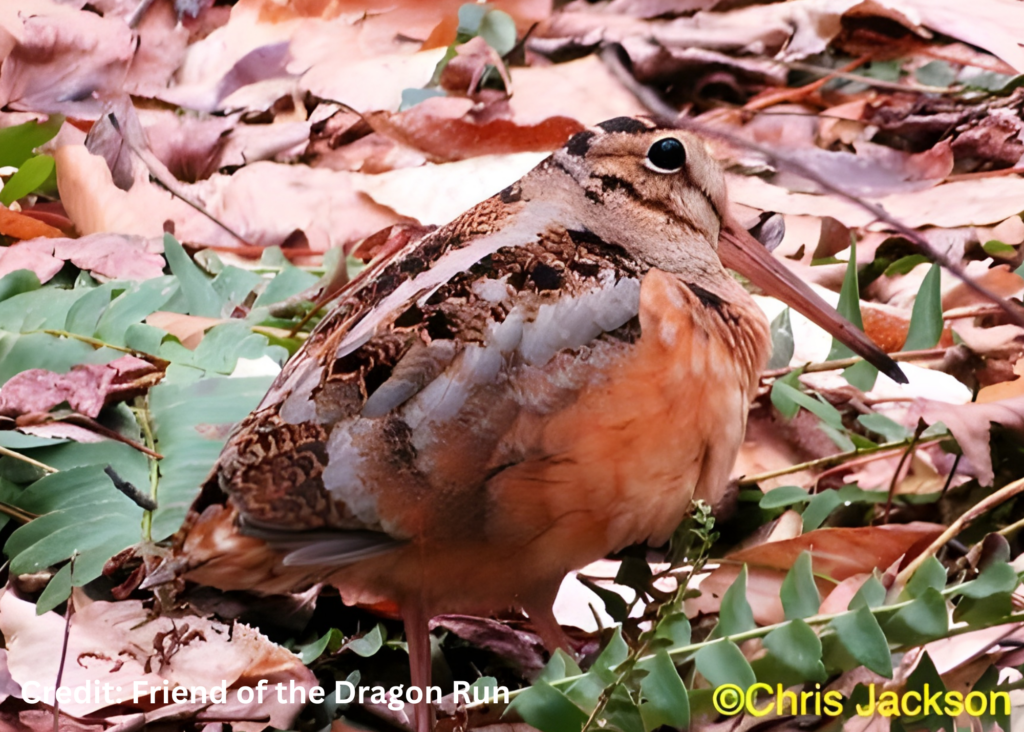
The American Woodcock is a small, secretive shorebird that spends most of its time on the forest floor, where its mottled brown feathers blend perfectly into the leaf litter. Despite being classified as a shorebird, woodcocks live in moist woodlands and brushy fields, using their long, sensitive bills to probe the soil for earthworms, insects, and other invertebrates. They are perhaps best known for their remarkable spring courtship display known as the “sky dance.” At dusk, males launch into the air in a spiraling flight before descending back to the ground while their wings create a distinctive musical twittering sound. Before each flight, they give a nasal call often described as “peent.” While they can be difficult to see, their sounds often give them away.
Most active late winter through early spring (February–April) during the breeding season. Listen at dawn or dusk, when males call and perform their aerial display flights.
American Woodcocks favor young forests, brushy fields, woodland edges, and regenerating clearings near moist forest soils where they can forage for earthworms. Listen for their calls in open clearings, early successional forests, and field edges near wooded wetlands or streams throughout Virginia’s River Realm.
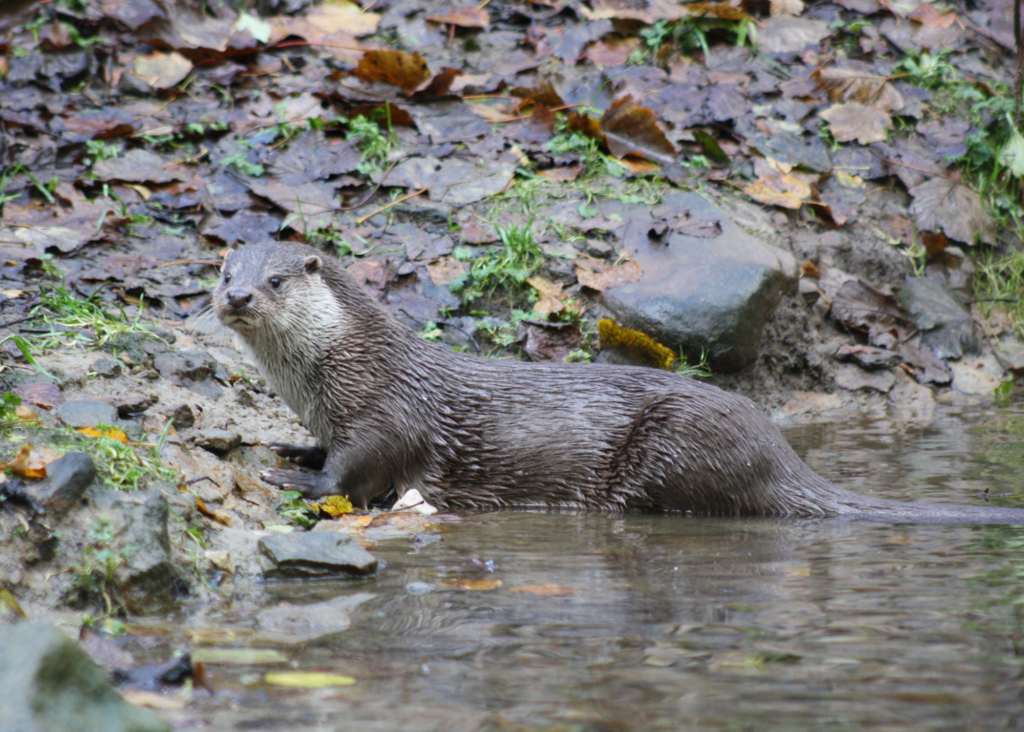
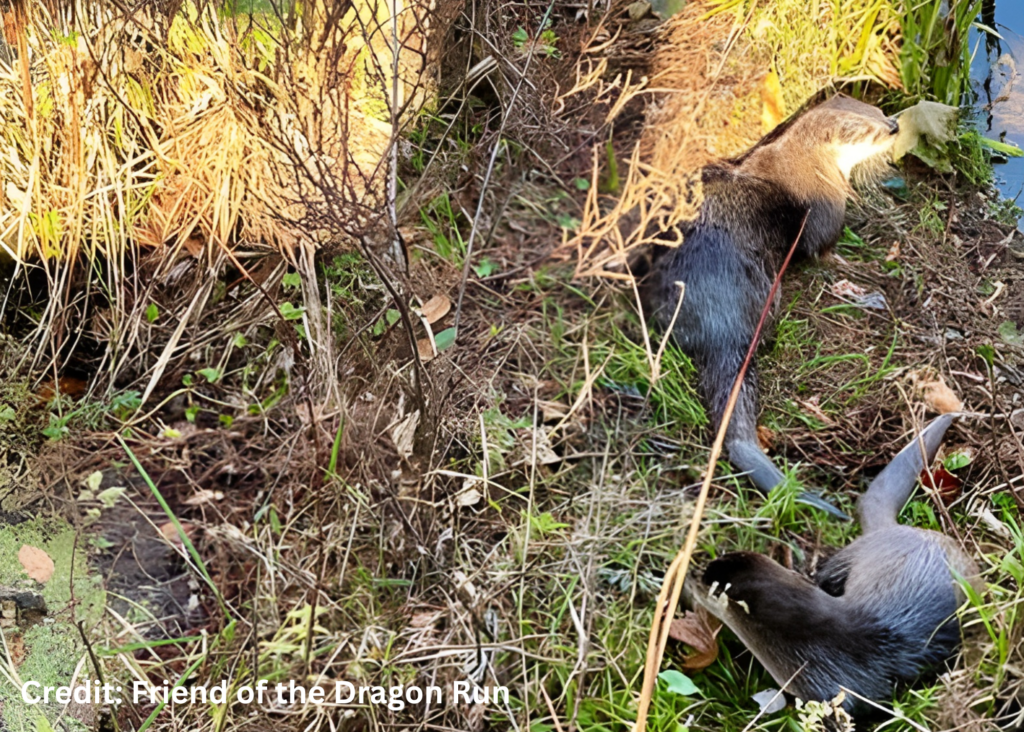
Playful, curious, and incredibly agile in the water, the North American River Otter is one of the most exciting wildlife sightings in Virginia’s River Realm. These sleek, semi-aquatic mammals are powerful swimmers, often seen diving, twisting, and sliding along muddy banks as they hunt for food. River otters feed on a variety of aquatic prey including fish, crayfish, frogs, mussels, and other small animals found in healthy waterways. Because they are sensitive to pollution and habitat loss, their presence is often considered a sign of clean, thriving ecosystems. While they can be elusive, those lucky enough to encounter one often witness their energetic behavior—sometimes traveling in pairs or small family groups.
River otters are active year-round, but sightings are often more likely late winter through early spring (January–April) when vegetation is sparse and otters are more frequently traveling along waterways. They are most active around dawn and dusk, though they may occasionally be seen during the day, especially in quiet areas.
River otters favor clean waterways with abundant fish and natural shoreline habitat. Look for them along tidal creeks, marsh edges, forested wetlands, and slow-moving rivers where muddy banks provide places to slide into the water or build dens. They are sometimes spotted swimming in pairs or leaving tracks and slides along the shoreline of quiet creeks and wetlands throughout Virginia’s River Realm.
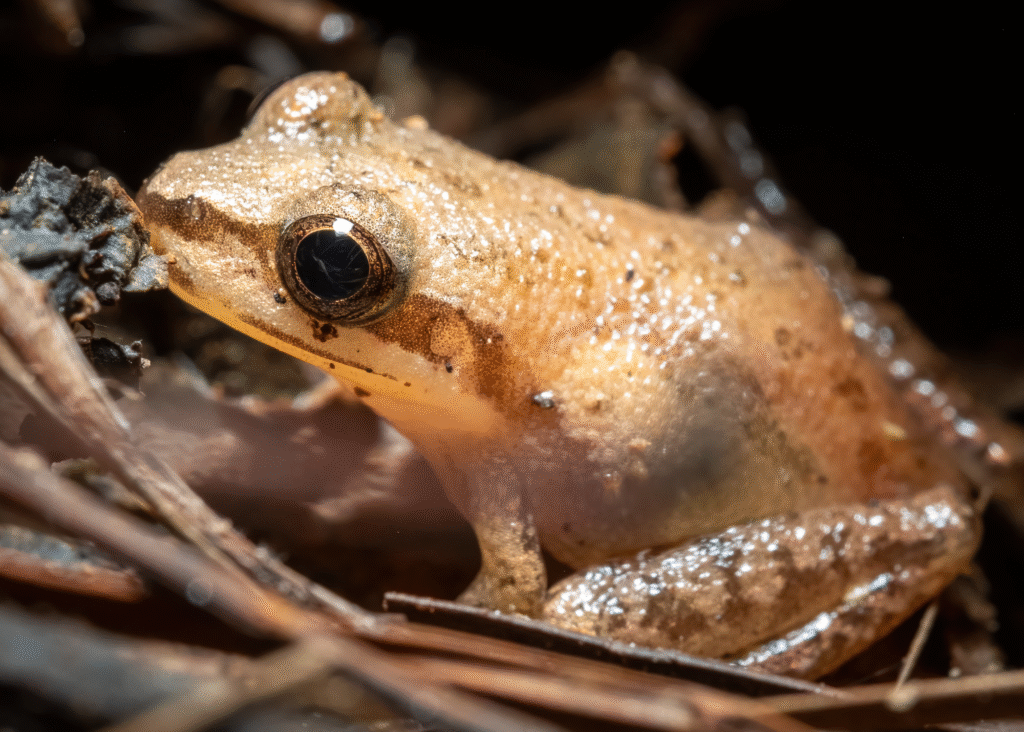
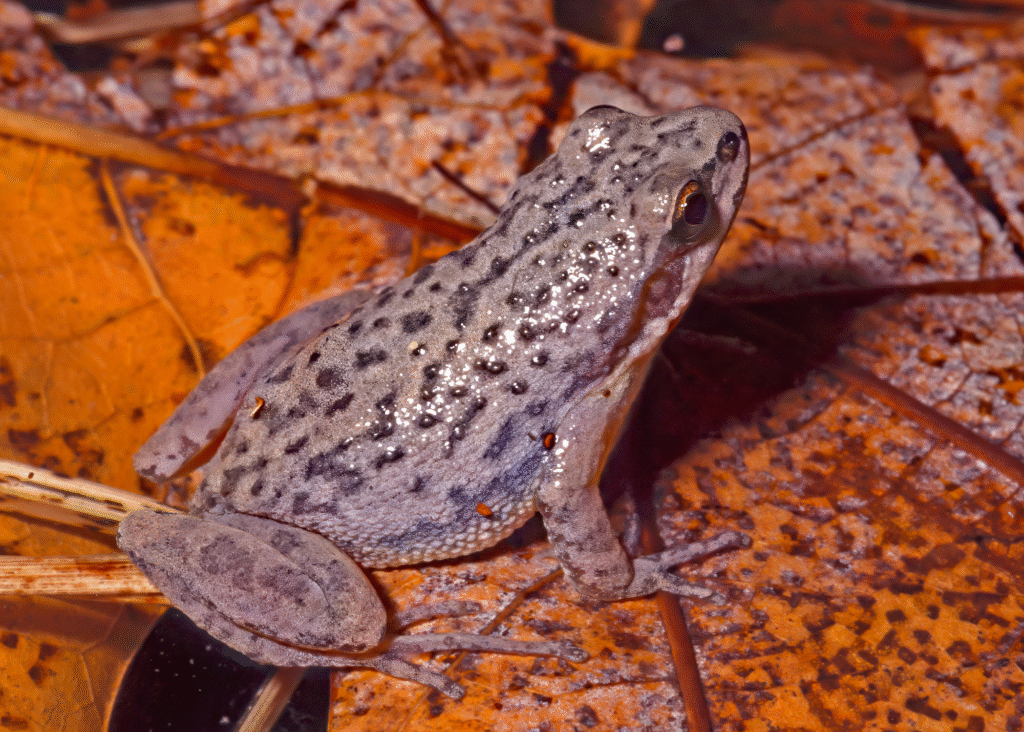
One of the first true sounds of spring in Virginia’s River Realm, upland chorus frogs announce the season from wetlands, swamp edges, and low-lying woods. Though small and often hidden, their high-pitched evening calls fill the air in late winter and early spring, signaling that warmer days—and new life—have arrived.
Upland chorus frogs are small, tan to brown frogs with darker stripes along their sides; they are more often heard than seen, calling from low vegetation or shallow water near wetland edges.
Late winter through early spring, with peak calling activity from February through April, especially on warm, damp evenings.
Swamp-edge and wetland trails; Low-lying wooded areas with seasonal pools; Boardwalks and trailheads near wetlands.
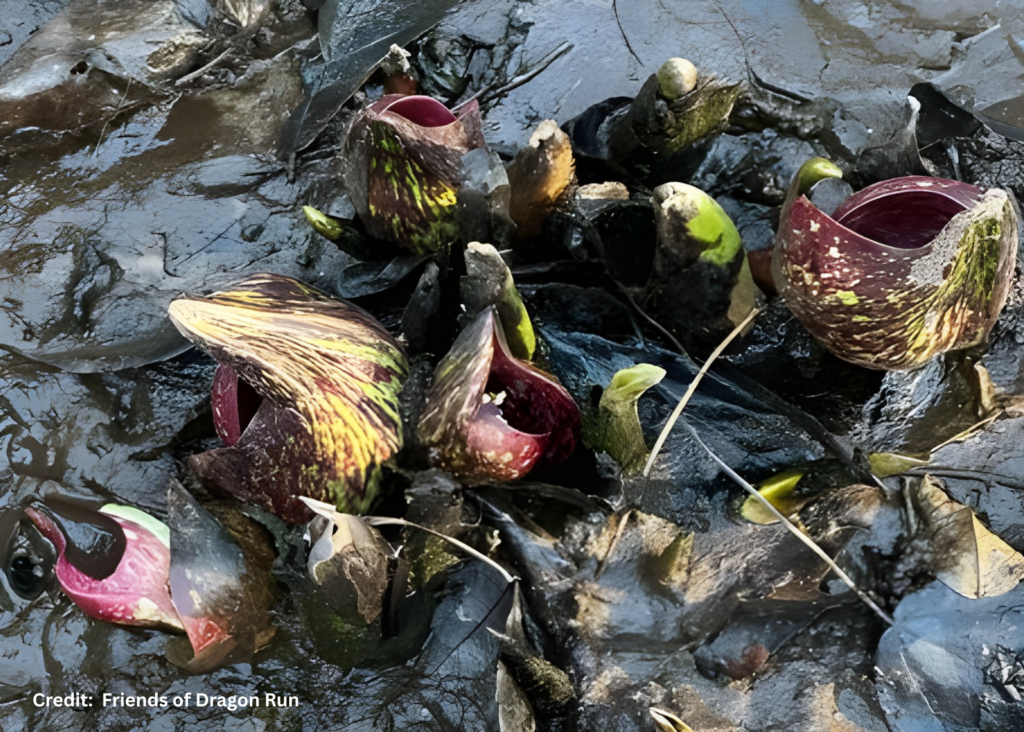
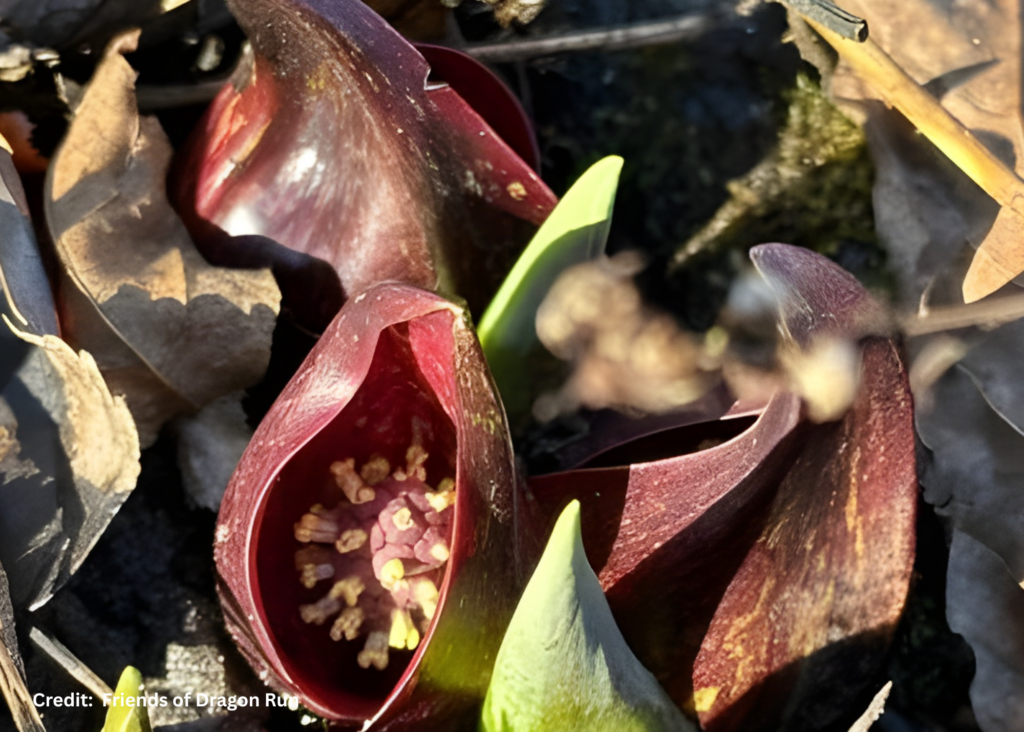
Skunk cabbage is one of the earliest signs that winter is loosening its grip on the landscape. Often emerging while snow is still on the ground, this unusual native plant pushes up mottled purple, hood-shaped flowers that generate their own heat to melt surrounding ice and attract early pollinators. Later in the season, large bright-green leaves unfurl, giving the plant its cabbage-like appearance. When bruised, the plant releases a strong odor—hence the name “skunk cabbage”—which helps attract insects that pollinate it. Though not particularly showy, it’s a fascinating species and a true herald of spring in wet woodlands.
Late winter through early spring, typically January-February. The distinctive purple flower structures usually appear first, sometimes pushing through frozen ground before the leaves emerge.
Look for skunk cabbage in wet woodlands, swampy areas, and along slow-moving streams or springs where the soil stays saturated.
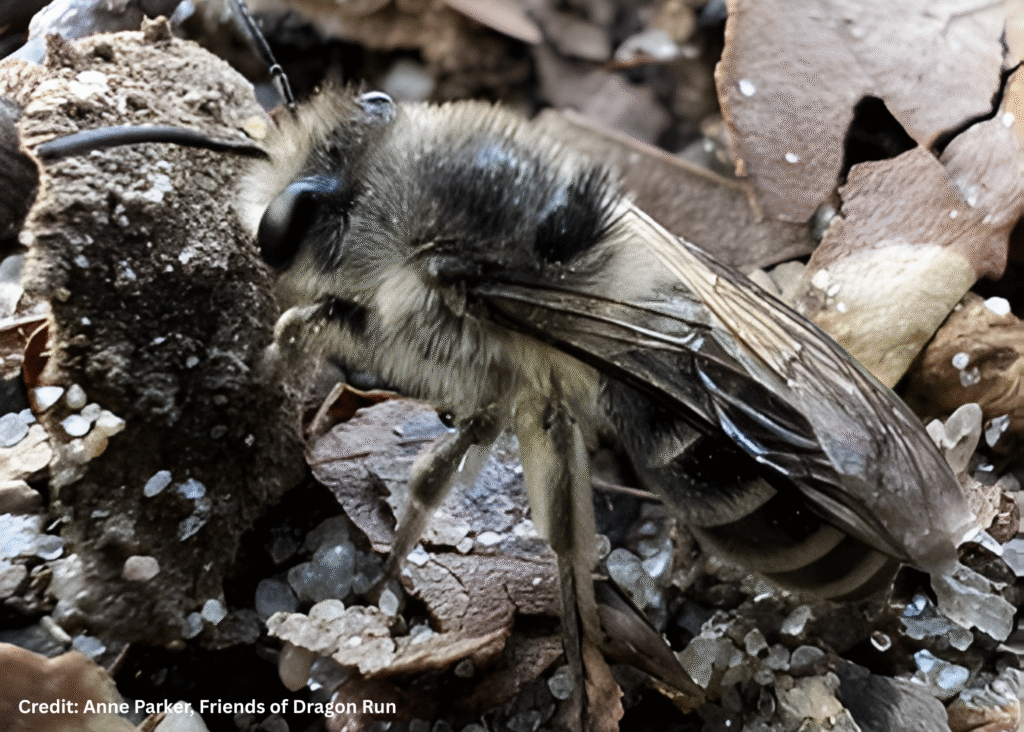
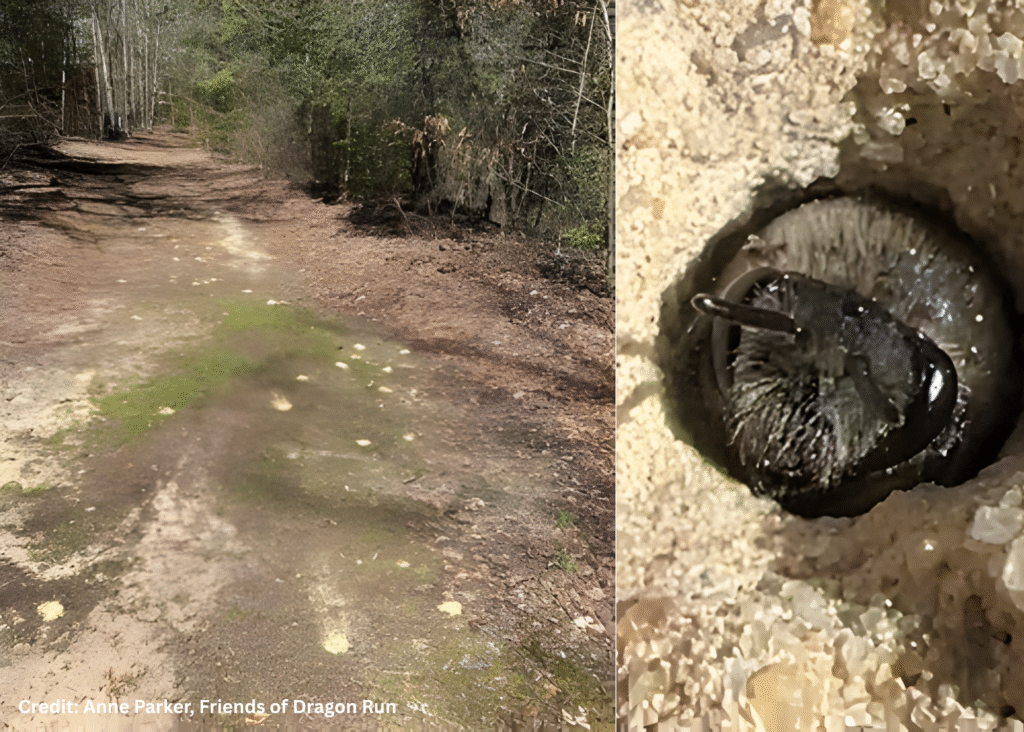
One of the quiet signs of early spring in Virginia’s River Realm, cellophane bees emerge as temperatures warm and wildflowers begin to bloom. These solitary, native bees are important pollinators of early spring flowers, often appearing in small groups as they nest in sandy soil along trails, banks, and open ground.
Cellophane bees are small to medium-sized native bees with fuzzy brown or tan bodies, often mistaken for small honeybees, and are most noticeable when seen hovering low over sandy ground or visiting early spring blooms.
Late winter through early spring, with peak activity from February through March and tapering into April, especially on warm, sunny days.
Sandy patches of ground along trails, launches, and parking areas; Bare soil near forest edges and early spring wildflowers; Open, sunny areas where the ground is undisturbed
Tip: If you see what looks like a cluster of tiny anthills, look closer—you may be standing near a cellophane bee nesting area. Watch from a distance and enjoy the activity without disturbing the nests.